Prepared Meals vs. Meal Kits: Which is Right for Your Lifestyle in 2026?
It is 6:45 PM on a Tuesday. You just finished a 10 hour day. Your "healthy" meal kit is sitting in the fridge, mocking you with its 12 step recipe and a pile of unwashed kale. You want to eat well, but the reality of the prepared meals vs meal kits debate usually ends with you choosing expensive takeout filled with hidden seed oils. We all know that feeling of staring at a box of raw ingredients and realizing you still have 45 minutes of work before you can actually eat.
You shouldn't have to choose between your health and your free time. This guide will help you reclaim 8 hours of your week and finally eliminate decision fatigue. You are going to discover the definitive comparison between meal kits and prepared meals to find the perfect balance of convenience and flavor for your busy schedule. We will look at how moving away from the chopping block allows you to enjoy chef quality, 100% seed oil free food every single night without a single dish to wash.
Key Takeaways
- Learn the fundamental differences between ingredient-based boxes and chef-ready options to find your perfect lifestyle fit for 2026.
- Discover how to reclaim up to 10 hours every week by analyzing the actual time spent on prepared meals vs meal kits.
- Master the "Time-Value" test to decide if your evening is better spent cooking from scratch or enjoying perfectly portioned, healthy results.
- Understand why chef-prepared meals offer a nutritional edge with zero effort and no hidden prep time or cleanup.
- Find out how to enjoy fresh, never-frozen meals that are 100% seed-oil free and designed to keep your busy week running smoothly.
Defining the Great Debate: Prepared Meals vs. Meal Kits
Choosing between prepared meals vs meal kits is the most important decision for your kitchen in 2026. The meal delivery market has evolved rapidly, growing from an $11 billion industry in 2021 to a projected $27 billion by the end of next year. This growth happened because our lives got faster. The old "home-cooked" standard used to mean spending two hours in the kitchen every night. Now, modern families define a home-cooked meal by its nutritional value and ingredient quality, not the amount of sweat equity involved. You have to decide if you want to be the chef or the guest at your own table.
The core of this debate centers on creativity versus convenience. Both options aim to get you away from processed fast food, but they take very different paths to get there. Consider these primary differences:
- Meal Kits: These focus on the cooking experience, skill building, and the process of assembly.
- Prepared Meals: These focus on time-saving, health results, and eliminating the stress of cleanup.
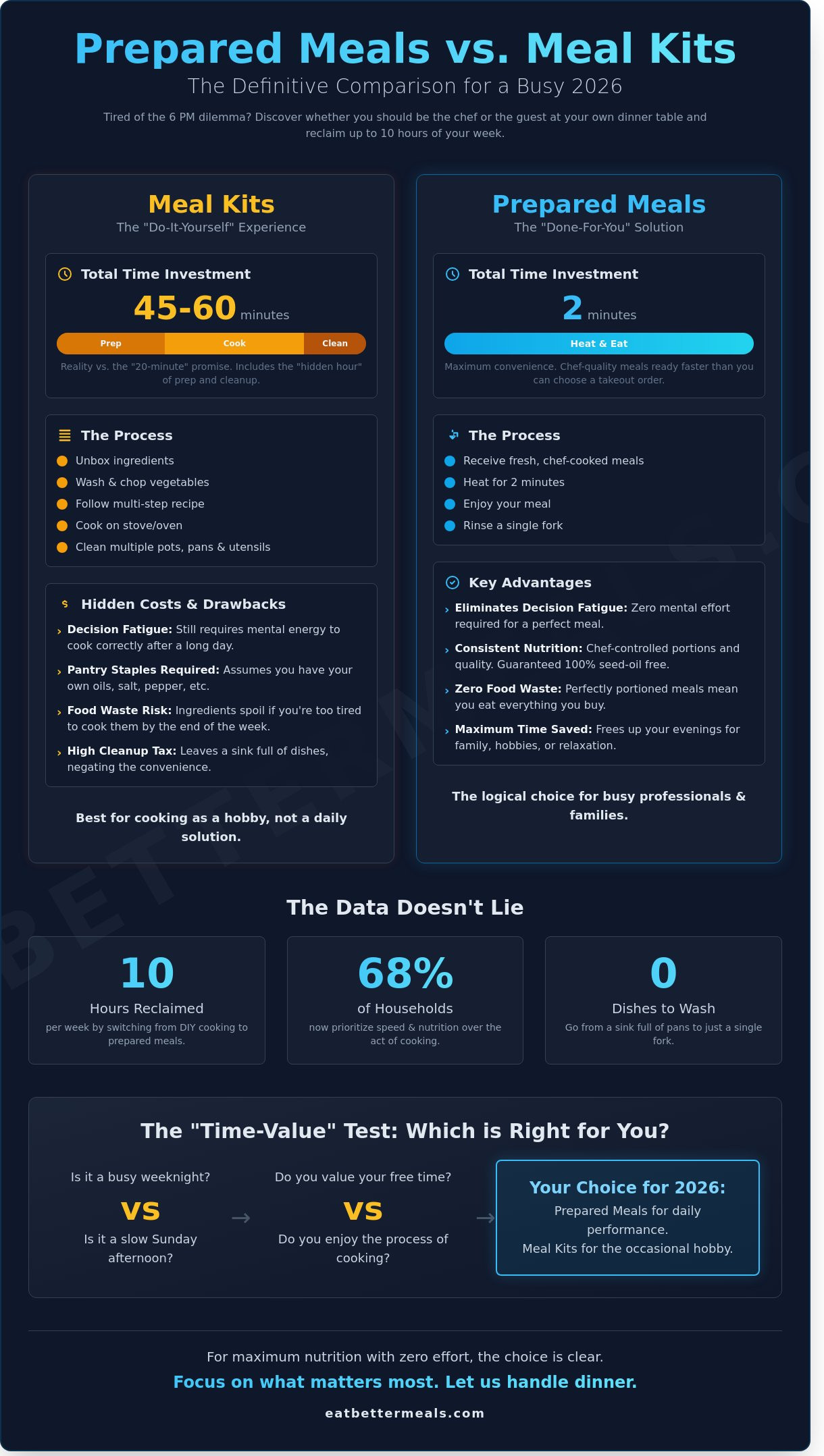
A 2024 consumer survey showed that 68% of households now prioritize speed and nutritional density over the actual act of cooking. This shift has made the prepared meals vs meal kits comparison a daily topic for busy professionals and on-the-go families who want to feel great without the hassle.
What Exactly is a Meal Kit?
A meal kit is a box of raw, pre-portioned ingredients paired with a recipe card. You're responsible for the entire process: unboxing, washing, chopping, and cleaning up the kitchen afterward. The appeal is psychological. It makes you feel like a pro chef without the grocery store run. While many brands claim their kits take 20 minutes, 2025 time-tracking data shows most users spend 45 minutes on prep and cleanup. It's a hobby, not just a meal solution.
What Exactly are Prepared Meals?
Prepared meals are the ultimate "grab and go" solution for high-performers. There's no chopping or cooking required. You simply deliver, heat for 2 minutes, and enjoy. Don't confuse these with the salty, frozen TV dinners of the past. Today's chef-prepared meals, like the options at Eat Better Meals, stay fresh in the fridge using advanced sealing techniques rather than preservatives. Every meal is 100% seed oil free to keep you healthy and energized. It's about removing the friction from your day so you can focus on what matters most.
The Reality of Meal Kits: Cooking as a Hobby vs. a Chore
Meal kits often arrive with the promise of a gourmet experience. On a slow Sunday afternoon, the idea of dicing fresh vegetables and whisking a handmade glaze feels like a fun creative outlet. By Tuesday evening at 6:00 PM, that hobby quickly transforms into a demanding chore. Comparing prepared meals vs meal kits reveals a massive gap between the "idea" of cooking and the daily reality of a busy lifestyle. For 68% of professionals, the energy required to follow a multi-step recipe after a long shift simply isn't there.
The Prep and Cleanup Tax
Most meal kit companies advertise "30-minute" recipes. Data from home kitchen trials shows that the average person actually spends 48 minutes on active prep and cooking. This "Hidden Hour" doesn't account for the mental energy spent decoding complex instructions or the frustration of a missing ingredient. You are essentially paying to do the manual labor yourself.
- The Post-Meal Slump: After eating, you are met with a sink full of pots, pans, and prep bowls.
- Inaccurate Timing: Recipe cards rarely include the time it takes to preheat ovens or boil large pots of water.
- Physical Exhaustion: Standing in the kitchen for an hour is the last thing most people want after a 9-hour workday.
The cleanup process is the most significant deterrent. While a prepared meal requires washing a single fork, a meal kit often leaves you scrubbing charred sheet pans and oily spatulas. If you want to save your evening for relaxing, skipping the dishes is the fastest way to reclaim your time.
Hidden Costs of Cooking at Home
The price on the box isn't the final cost of your dinner. Meal kits frequently assume you have a fully stocked pantry. You'll need your own olive oil, salt, pepper, and sometimes even butter or flour. If you run out of these "staples," the convenience of the kit vanishes instantly. There is also the literal cost of energy. Running an oven at 400 degrees for 40 minutes daily adds a measurable amount to your monthly utility bill.
Food waste remains a silent budget killer. According to 2021 EPA estimates, food waste is the largest category of material in municipal landfills. When you are too exhausted to cook, those fresh ingredients in the kit sit in the fridge. By Friday, the wilted greens and softened proteins often end up in the trash. When evaluating prepared meals vs meal kits, remember that prepared options arrive perfectly portioned and ready to eat, which eliminates the risk of throwing your money away.
A meal kit is a great tool if you enjoy the process of cooking as a weekend activity. However, if your goal is to stay healthy and fueled without the stress, the "hobby" of the kit often becomes the "chore" of your week.
The Prepared Meal Advantage: Maximum Nutrition with Zero Effort
Choosing prepared meals vs meal kits often comes down to how much you value your Sunday afternoons. Most people spend roughly 10 hours every week on food related tasks. That includes driving to the store, chopping vegetables, standing over a stove, and scrubbing pans. Prepared meals give those 600 minutes back to you. You get to skip the line and the mess without sacrificing a single gram of nutrition.
Portion control is another huge win for your health. When you cook a meal kit, it's easy to overeat or misjudge serving sizes. Chef-prepared options eliminate the guesswork entirely. Every container arrives with exact macros and calorie counts clearly labeled. You know exactly what you're fueling your body with. It's the ultimate tool for staying consistent with your health goals without the mental fatigue of tracking every ingredient.
The "Grab and Go" factor is a game changer for busy professionals and on the go families. You don't have to follow a 12 step recipe card after a 9 hour workday. You just heat, eat, and get back to your life. It's the difference between a stressful evening and a relaxing one. Consider these benefits:
- Time Freedom: Reclaim up to 10 hours a week for family, fitness, or hobbies.
- Zero Waste: No more throwing away wilted spinach or unused herbs from a kit.
- Total Consistency: Your nutrition stays on track even on your busiest days.
- No Cleanup: Forget about a sink full of pots and pans every single night.
Chef-Quality Flavor Without the Chef Price
Professional chefs use techniques like precise temperature control and high level seasoning that are hard to replicate in a home kitchen. You can enjoy sophisticated dishes like Chicken Piccata or Shrimp Scampi for a fraction of the cost of a restaurant meal. This makes prepared options the most efficient healthy meal delivery solution for anyone who loves variety. You get gourmet results without the gourmet price tag or the cleanup.
Health Standards: The Seed Oil Factor
Many meal kits rely on cheap industrial seed oils to keep costs down and add flavor. These oils, like soybean or canola, are often linked to inflammation in the body. When comparing prepared meals vs meal kits, look at the ingredients list. We take a different approach. Every meal we prepare is 100% seed oil-free. We use high quality fats that support your long term health instead of compromising it. This small change makes a massive difference in how you feel every day.
Choosing Your Path: A Decision Framework for 2026
Deciding between prepared meals vs meal kits comes down to one question. What's an hour of your evening worth? When you analyze the prepared meals vs meal kits debate, your decision should mirror your 2026 productivity goals. If you value your post-work hours at $50 or $75, spending 45 minutes chopping onions and 30 minutes cleaning dishes represents a high labor cost for a single dinner. High-performance individuals are increasingly choosing efficiency over the performance of cooking.
Your kitchen skills also play a major role. Are you an aspiring chef or a hungry consumer? Meal kits require you to follow multi-step instructions and master heat control. If your goal is to fuel your body with 100% seed oil free ingredients without the stress, prepared options are the winner. For those focused on muscle gain, precision is key. A pre-portioned meal like our Steak and Sweet Potato provides exact macros. Kits often leave room for accidental calorie additions through excess oil or butter.
Flexibility matters too. You shouldn't be locked into a rigid system. The best services in 2026 offer a mix of "Try It Out" single orders and "Love It & Want To Save" recurring plans. This gives you total control over your fridge and your budget without a long-term contract.
When to Choose a Meal Kit
Choose a kit if you view the kitchen as your sanctuary. For roughly 18% of people, cooking acts as a form of active meditation. It's an effective way to teach children about food sources and basic kitchen safety. If you have 90 minutes to spare for the process and the cleanup, the kit provides a sense of accomplishment that a microwave cannot replicate.
When to Choose Prepared Meals
Pick this path when your meal prep services must be zero effort. This is for the professional working 50 or 60 hours a week who needs a healthy, delicious meal in under 180 seconds. You skip the grocery store, the prep work, and the mountain of greasy pans. It's about reclaiming your life while staying 100% on track with your wellness goals.
Why Eat Better Meals is the Logical Step for Your Health
Choosing between prepared meals vs meal kits often comes down to how much you value your time and your cellular health. At Eat Better Meals, we've eliminated the middle ground of chopping and cleaning. Our quality guarantee is simple: every dish is fresh and never frozen. We prepare our food in small batches to ensure you get the same taste as a home-cooked meal without the 60 minutes of kitchen labor usually required by a kit.
Our menu focuses on what your body actually needs to thrive. We prioritize high-protein and low-carb options that keep your energy stable throughout a 12-hour workday. Every single recipe in our kitchen is 100% seed oil free. This commitment to avoiding inflammatory oils like canola or soybean oil is a non-negotiable part of our philosophy. We believe your food should be as clean as it is tasty, supporting your health at a microscopic level.
Flexibility is at the core of what we do. You aren't forced into a rigid schedule that doesn't fit your life. You can try our service for a single week to taste the difference or subscribe and save to keep your fridge stocked automatically. It's about giving you the tools to succeed on your own terms.
From Our Kitchen to Your Door
Our chefs handle the heavy lifting to create nutrient-dense masterpieces. Whether it is our signature healthy bowls or our lean protein plates, each meal arrives ready to heat and eat. These ready to eat meal plans are the ultimate life-hack for 2026. They provide "Grab and Go" convenience for families who have less than 10 minutes to prep between school runs and gym sessions. You get the professional nutritional profile of a meal kit with the lightning speed of a snack.
Start Your Journey Today
We don't believe in locking you into a lifestyle you aren't ready for yet. Our "Try It Out" versus "Love It & Save" philosophy gives you total control over your experience. You can order a single week to test the flavors or choose a recurring plan to save 10% on every delivery. This makes the decision between prepared meals vs meal kits even easier for those who hate long-term commitments.
- Select your meal type based on your goals
- Pick from our rotating menu of fresh ingredients
- Add to cart and checkout in under 5 minutes
Customizing your first order is fast and intuitive. You pick the meals that look best to you, and we handle the logistics. By joining our community, you're choosing to be time-rich and healthy. Join thousands of successful customers who have stopped stressing over meal prep and started enjoying real food that fits their schedule.
Take Control of Your Time and Health Today
The choice between prepared meals vs meal kits comes down to how you value your daily energy. While meal kits might feel like a creative hobby at first, they often evolve into a 60 minute nightly chore of chopping and cleaning. By 2026, the shift toward maximum efficiency is clear. Choosing Eat Better Meals allows you to reclaim 7+ hours every single week that you'd otherwise spend over a hot stove or a messy sink. You get chef prepared dishes that are never frozen and always 100% seed oil free. This isn't just about convenience; it's about fueling your body with high quality ingredients without any of the stress. You don't have to sacrifice your evening to eat a nutritious dinner. You deserve a lifestyle where healthy eating is the easiest part of your busy day. Stop worrying about what's for dinner and start focusing on what matters most to you. We're here to make your health journey simple and delicious.
Ready to reclaim your time? Shop our seed-oil-free prepared meals now!
You've got the goals, and we've got the fuel to help you reach them!
Frequently Asked Questions
Are prepared meals healthier than meal kits?
Prepared meals are often healthier because they offer strict portion control and eliminate hidden calories from cooking oils. Eat Better Meals provides dishes like Grilled Chicken and Broccoli that are 100% seed oil free. This removes the 120 calories typically found in a single tablespoon of cooking oil used in many meal kits.
Do prepared meals taste as fresh as kits you cook yourself?
Prepared meals taste just as fresh when they're made with high-quality ingredients and delivered immediately after cooking. We cook our meals like the Steak and Sweet Potato mash in small batches to ensure flavor stays bold. Since these aren't frozen, the texture remains firm and delicious, unlike meal kits that might sit in a box for 48 hours during transit.
Which option is more cost-effective: meal kits or prepared meals?
Prepared meals are more cost-effective when you factor in the 100% reduction in food waste and the time saved on labor. While meal kits average $10 per serving, they often require you to provide your own pantry staples like salt and oil. Our Subscribe & Save option lowers the price per meal, ensuring you only pay for the 14 or 21 meals you actually eat.
Can I lose weight using prepared meal services?
You can lose weight using prepared meal services by sticking to a consistent, calorie-controlled plan. When comparing prepared meals vs meal kits, prepared options remove the guesswork of measuring ingredients. A person eating our 500-calorie Turkey Chili twice a day maintains a predictable caloric deficit, which is a proven way to drop pounds without the stress of meal prepping.
How long do prepared meals stay fresh in the refrigerator?
Prepared meals stay fresh for 5 to 7 days when kept at a constant temperature of 40 degrees Fahrenheit or lower. We use airtight packaging to lock in the nutrients of dishes like our Salmon and Asparagus. This 7-day window allows you to plan your entire work week without worrying about food safety or flavor degradation.
Is there a commitment required for prepared meal delivery?
No, there's no long-term commitment required to start eating better. You can choose the Try It Out option for a single week of orders to see if the service fits your life. If you decide you love it, you can switch to a recurring subscription to save money, but you can pause or cancel 4 days before your next delivery.
Are prepared meals better for people with busy schedules?
Prepared meals are the superior choice for busy schedules because they require 0 minutes of prep time compared to the 30 to 45 minutes needed for meal kits. If you work 50 hours a week, switching to prepared meals gives you back nearly 5 hours of free time every single week. It's a grab and go solution that fits perfectly into a fast-paced lifestyle.
What is the difference between prepared meals and frozen dinners?
The main difference is that prepared meals are never frozen and contain 0 artificial preservatives. Frozen dinners often sit in warehouses for 6 months, while our fresh meals are delivered within 24 to 48 hours of being cooked. You'll notice the difference in the texture of our Lean Ground Beef and Rice compared to the mushy consistency of a standard frozen tray.