Paleo Diet 101: A Modern Guide to Ancestral Eating in 2026
Feeling overwhelmed by conflicting diet advice? Worried that eating healthy means sacrificing your favorite meals and spending hours cooking from scratch? It doesn’t have to be that complicated. We believe that feeling great should be simple, and this modern guide to the paleo diet is designed to prove it. This isn't about strict rules or bland food; it's about fueling your body with delicious, whole foods that make you feel incredible, energized, and ready to take on your day.
Get ready to discover exactly how to make this powerful way of eating work for your busy life. We’ll give you a clear, straightforward list of what to eat and what to avoid-no more guesswork! You'll also learn our best time-saving tips to enjoy amazing, healthy meals without the stress. This is your roadmap to boosting your energy, improving your digestion, and finally making clean eating feel both easy and delicious. Let's get started!
Key Takeaways
- Understand the core principle behind Paleo to see why modern foods may be holding back your energy and health.
- Discover why avoiding industrial seed oils is the critical, often-missed step for reducing inflammation and getting results.
- Learn simple batch cooking strategies to conquer "kitchen fatigue" and make your paleo diet easy to stick with.
- Find out how you can enjoy delicious, perfectly-portioned Paleo meals without the shopping, chopping, or cleanup.
What is the Paleo Diet? Understanding the Ancestral Blueprint
At its core, the paleo diet is a powerful, simple approach to nutrition. It’s designed to mirror the way our hunter-gatherer ancestors ate during the Paleolithic era-a time before modern farming. This means focusing on whole, unprocessed foods that our bodies are biologically designed to thrive on: lean meats, fresh fish, vibrant fruits and vegetables, and healthy fats from nuts and seeds.
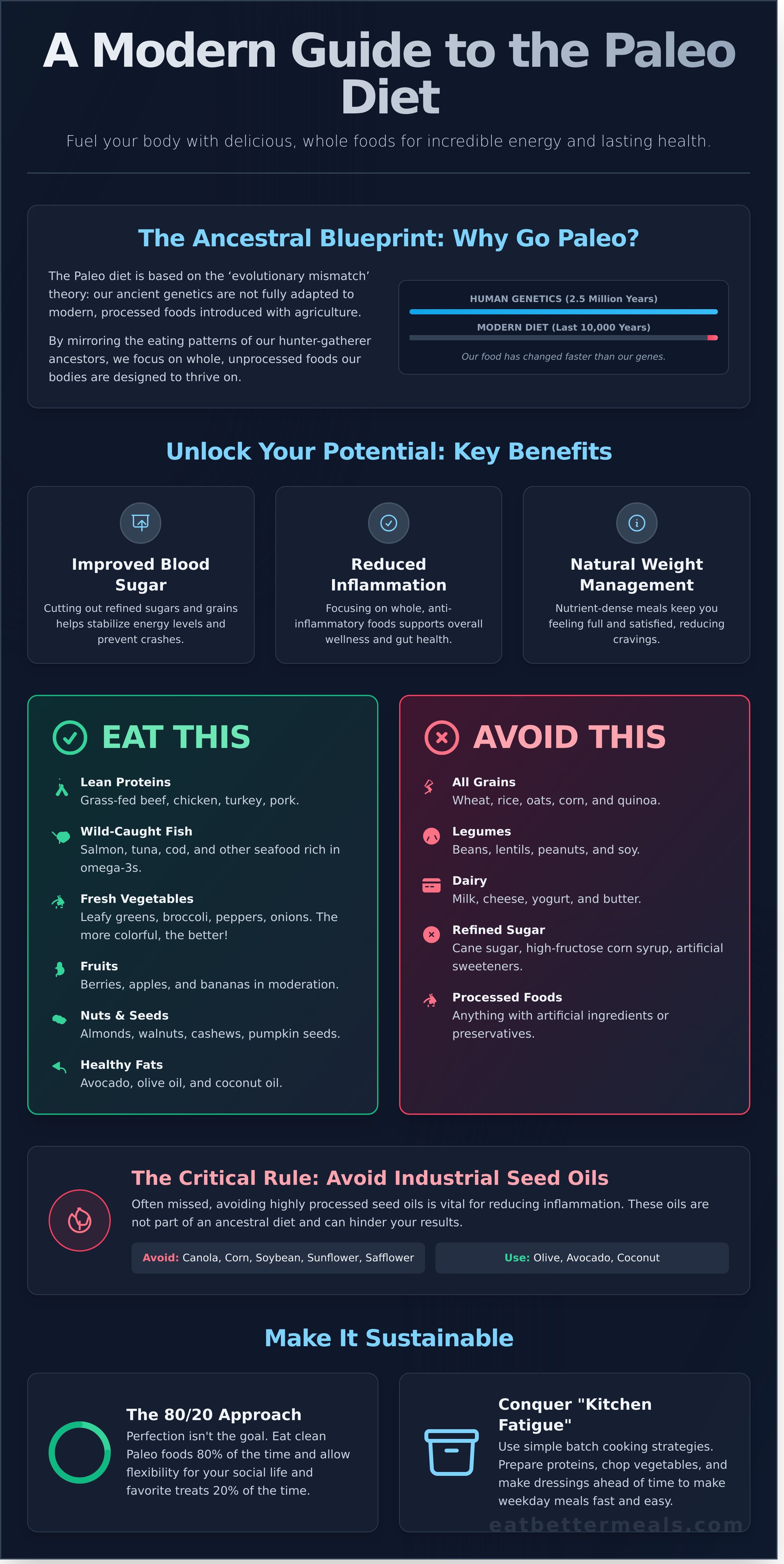
But why look to the past for modern health answers? The foundation of Paleo is built on the ‘evolutionary mismatch’ theory. This idea suggests that while our genetics have barely changed in thousands of years, our food environment has been completely transformed by agriculture and industrial processing. This rapid shift has created a mismatch between what our bodies expect and what we actually feed them.
The History and Science of the Caveman Diet
For roughly 2.5 million years, human nutrition was straightforward and natural. The agricultural revolution, which began about 10,000 years ago, introduced grains, legumes, and dairy into our diets for the first time, fundamentally changing our gut microbiome. The evolutionary mismatch theory is the simple but profound idea that our ancient genes are poorly adapted to our modern, agriculture-based diet. For a deeper dive into the concept, the foundational principles of the Paleo diet are well-documented and provide a strong scientific starting point.
Modern Paleo vs. Strict Paleo: Finding Your Balance
Great news: you don’t need to be a perfect caveman to get amazing results. The goal isn't 100% strictness but sustainable health. Many people succeed with an 80/20 approach-eating clean Paleo foods 80% of the time while allowing flexibility for your social life. Modern nutritional science also helps refine the original guidelines, focusing on nutrient density and sustainable energy over rigid, outdated rules.
By prioritizing foods our bodies recognize, this ancestral blueprint helps you unlock real results:
- Improved Blood Sugar: Cutting out refined sugars and grains helps stabilize energy levels.
- Reduced Inflammation: Focusing on whole, anti-inflammatory foods supports overall wellness.
- Natural Weight Management: Eating satisfying, nutrient-dense meals keeps you feeling full and energized.
In 2026, Paleo remains a top choice for those seeking clean energy and lasting health. It's not a temporary fix; it's a lifestyle framework for feeling your absolute best.
The Paleo Food List: What’s In and What’s Out?
Ready to build a delicious, Paleo-friendly plate? The goal is simple: focus on whole, nutrient-dense foods that our ancestors would have recognized. The core purpose of a paleo diet is to fuel your body with clean energy, cutting out modern, processed ingredients that can cause inflammation and other issues.
Here’s a quick guide to your new grocery list:
The Green List (What to Eat!)
- Lean Proteins: Grass-fed beef, chicken, turkey, pork.
- Wild-Caught Fish: Salmon, tuna, cod, and other seafood rich in omega-3s.
- Fresh Vegetables: Leafy greens, broccoli, peppers, onions-the more colorful, the better!
- Fruits: Berries, apples, and bananas in moderation.
- Nuts & Seeds: Almonds, walnuts, cashews, and pumpkin seeds (avoid peanuts, which are legumes).
- Healthy Fats: Avocado, olive oil, and coconut oil are your go-to fats for cooking and dressings.
The Red List (What to Avoid!)
- All Grains: Wheat, rice, oats, corn, and quinoa.
- Legumes: Beans, lentils, peanuts, and soy.
- Dairy: Milk, cheese, yogurt, and butter.
- Refined Sugar: Cane sugar, high-fructose corn syrup, and artificial sweeteners.
- Processed Foods: Anything with a long list of artificial ingredients or preservatives.
You might wonder why grains and legumes are out. These foods contain compounds like lectins and phytic acid, which can interfere with nutrient absorption and irritate the digestive system for some people. By removing them, the paleo diet aims to improve gut health and reduce inflammation.
Proteins and Produce: The Foundation of Your Plate
For the best results, choose quality over quantity. Grass-fed beef and wild-caught salmon offer a superior fatty acid profile compared to their conventional counterparts. Fill the rest of your plate with a 'rainbow' of vegetables to get a wide array of fiber and micronutrients. When you need a quick snack, low-glycemic fruits like berries are a perfect choice, providing antioxidants without a major sugar spike.
Hidden Non-Paleo Ingredients to Watch Out For
Navigating the grocery store requires a sharp eye. Many packaged foods, even "healthy" ones, contain hidden non-Paleo ingredients. Always read the label! Watch out for soy lecithin, corn starch, or whey (a dairy derivative) in sauces, dressings, and even canned goods. Hidden cane sugar and grain-based thickeners are common culprits that can derail your progress without you even realizing it.
The Missing Link: Why Seed-Oil Free is Vital for Paleo Success
You've ditched the grains, said goodbye to dairy, and focused on whole foods. But if you're still feeling sluggish or not seeing the results you want, there's a hidden saboteur in your diet: industrial seed oils. These cheap, highly processed fats like canola, soybean, and sunflower oil are everywhere. They sneak into restaurant meals, packaged "health" foods, and salad dressings, directly undermining the anti-inflammatory goals of a true paleo diet.
Inflammation and the Omega-6 to Omega-3 Ratio
Your body needs a healthy balance of Omega-6 and Omega-3 fatty acids to function. Industrial seed oils flood your system with excessive Omega-6, throwing this critical ratio out of whack and fueling chronic inflammation. While the Mayo Clinic's guide on What is the Paleo Diet? covers the main food groups, mastering your fats is the next level. When heated, these unstable oils oxidize easily, creating free radicals that trigger a powerful inflammatory response throughout your body. A proper paleo lifestyle naturally restores this balance, supporting better heart and metabolic health.
Choosing the Right Cooking Fats for 2026
Ready to feel the difference? It starts in your kitchen. Purging the "Hateful Eight" industrial oils-canola, corn, cottonseed, soy, sunflower, safflower, grapeseed, and rice bran-is your first step. Replace them with stable, nutrient-dense fats that our ancestors thrived on. True Paleo-approved fats are minimally processed, like cold-pressed oils and traditional animal fats.
- For High-Heat Searing: Use tallow, lard, or avocado oil. They have high smoke points and remain stable.
- For Low-Heat Sautéing: Coconut oil and ghee are excellent choices.
- For Dressings & Drizzling: Stick with cold-pressed extra virgin olive oil.
The problem is, even when you eat out at a "Paleo-friendly" spot, they are almost always using cheap seed oils to cook your food. It’s a cost-cutting measure that passes the inflammation on to you. At Eat Better Meals, we take this seriously. We are 100% Seed-Oil Free! We cook exclusively with healthy fats like olive oil, coconut oil, and avocado oil to ensure every meal supports your health goals and delivers maximum anti-inflammatory benefits. It’s the Paleo promise, delivered right to your door.
Making Paleo Sustainable: Overcoming the Meal Prep Hurdle
Let's be honest: the biggest challenge of the paleo diet isn't what to eat, but the time it takes to prepare it. "Kitchen fatigue"-the endless cycle of shopping, chopping, and cooking-is the #1 reason people quit. But making this lifestyle sustainable doesn't have to be a struggle. With a few smart strategies, you can make the paleo diet work for your busy life.
The secret is batch cooking. Dedicate one or two hours on a Sunday to prepare your staples for the week. Grill a pack of chicken breasts, brown some ground beef, and roast a big tray of sweet potatoes and broccoli. This turns weekday meal prep into a simple, 5-minute assembly job.
A well-stocked pantry is your best defense against impulse eating. Keep these on hand:
- Nuts and seeds (almonds, walnuts, pumpkin seeds)
- Quality proteins (canned tuna, salmon, beef jerky)
- Healthy fats (avocado oil, olive oil, coconut milk)
- Frozen fruits and vegetables for quick sides
Finally, shift your mindset from 'restriction' to 'abundance'. Instead of focusing on what you can't have, celebrate the huge variety of delicious, whole foods you get to enjoy-fresh meats, vibrant vegetables, and healthy fats that make you feel amazing.
A Typical Day of Paleo Eating
What does this look like in practice? It’s simpler than you think. Start your day with protein-rich scrambled eggs and avocado. For lunch and dinner, follow the simple formula of protein + healthy fat + fiber. Think a big salad topped with your pre-cooked chicken and a drizzle of olive oil. For a snack, grab a handful of nuts or some jerky to power through an energy dip.
Paleo on a Budget and a Schedule
You don't need a huge budget to succeed. Buy ground meat and frozen vegetables in bulk to save money. For a 2-minute meal hack, toss your batch-cooked protein on a bed of pre-washed greens. And for the ultimate 'cheat code' to stay on track? A prepared meal delivery service eliminates all the guesswork and prep, delivering delicious, perfectly portioned Paleo meals right to your door. It’s the easiest way to guarantee consistency, and you can explore hassle-free options that fit your goals.
Effortless Paleo with Eat Better Meals
Understanding the principles of the Paleo diet is the first step. But putting it into practice-which often means hours of sourcing compliant ingredients, chopping, and cooking-is where many people get stuck. What if you could get all the incredible benefits without the daily work? Eat Better Meals makes sticking to your health goals simple and delicious. We deliver chef-prepared, ready-to-eat Paleo meals right to your door, so you can reclaim your time and feel your best.
We take the stress out of healthy eating so you can focus on feeling great. Here’s how we make your journey easy:
- Chef-Crafted & Ready-to-Eat: No more meal prep! Our delicious meals are cooked to perfection and ready in minutes.
- 100% Seed-Oil Free: We use only high-quality, healthy fats like olive oil, avocado oil, and coconut oil, so you never have to guess what's in your food.
- Perfectly Portioned: Each meal is designed to provide the optimal balance of protein, healthy fats, and carbohydrates to fuel your body and mind.
- Flexible For Your Life: Choose a single-week order to try it out or subscribe to our 'Love It & Save' plan for recurring deliveries.
Fresh, Never Frozen: The Eat Better Meals Difference
Our meals taste like they came from your own kitchen, only better! We start by sourcing high-quality, Paleo-compliant ingredients from trusted partners. Our chefs then prepare everything fresh each week-never frozen-to lock in incredible flavor and nutrients. This commitment to freshness makes our meals the perfect ‘grab and go’ solution for busy professionals and on-the-go families who refuse to compromise on quality or taste.
Take the Next Step Toward Your Health Goals
Ready to see how easy healthy eating can be? You can browse our current Paleo-friendly menu and build your first box in just a few clicks. Making your paleo diet journey successful has never been simpler. Our recurring meal plans are completely commitment-free-pause or cancel anytime. Join a community of thousands who have reclaimed their health and time with us. Start your journey today at eatbettermeals.com!
Embrace Modern Paleo: Your Path to Effortless Health
Embarking on the paleo diet is a powerful step towards reclaiming your health. As we've explored, success in 2026 isn't just about eating ancestral foods; it's about understanding modern pitfalls, like inflammatory seed oils, and overcoming the biggest challenge: consistent meal prep. You don’t have to choose between your health goals and your busy schedule. You can have both.
That's where Eat Better Meals makes it simple. We deliver delicious, chef-prepared Paleo meals that are always 100% seed oil free and ready to eat in just two minutes. Forget the shopping, chopping, and cooking. You get all the benefits, without the stress. And with no subscription required to start, trying it out is completely risk-free.
Ready to eat Paleo without the prep? Explore our 100% seed-oil free meal plans today! Your journey to feeling fantastic is just one delicious, convenient meal away.
Frequently Asked Questions
Is the Paleo diet safe for long-term use?
Many people thrive on a long-term paleo diet because it emphasizes whole, unprocessed foods. By cutting out processed ingredients and focusing on nutrient-dense meats, vegetables, and healthy fats, you're building a great foundation for health. However, it's always a smart move to talk with a doctor or registered dietitian to ensure it meets your specific nutritional needs and health goals for the long haul. They can help you create a balanced plan that works for you.
Can I eat potatoes on a Paleo diet?
This is a common question! While strict Paleo followers often avoid white potatoes due to their high starch content, many people now include them in moderation. Sweet potatoes, on the other hand, are a definite yes and a fantastic source of complex carbs and nutrients. It really depends on your personal goals and how your body responds. The key is focusing on whole, unprocessed versions rather than french fries or chips.
How much weight can I expect to lose on Paleo?
Weight loss results vary from person to person, as they depend on your starting point, activity level, and consistency. The great thing about Paleo is that it naturally eliminates many high-calorie, processed foods and sugars that can hinder weight loss. By focusing on satisfying, whole foods like protein and vegetables, many people find they feel fuller longer and naturally reduce their calorie intake, leading to positive results on the scale.
What is the difference between Keto and Paleo?
Think of it this way: Paleo focuses on food *quality* by eating like our ancestors-meats, fish, veggies, and fruits, while avoiding grains, dairy, and processed foods. Keto, however, focuses on *macros* by drastically cutting carbs to put your body into a state of ketosis. For example, honey is Paleo-friendly but not Keto. On the other hand, cheese is Keto-friendly but not Paleo. They are two different approaches to healthy eating.
Is Paleo expensive to maintain for a family?
Focusing on high-quality ingredients can sometimes increase a grocery bill, but it doesn’t have to break the bank! You can make Paleo budget-friendly by buying produce that’s in season, choosing cheaper cuts of meat, and stocking up on frozen fruits and vegetables. Planning meals ahead of time helps reduce waste and makes shopping more efficient, keeping your family’s health journey affordable and delicious.
How do I get enough calcium on a dairy-free Paleo diet?
Getting enough calcium without dairy is easy when you know where to look! Focus on packing your meals with dark leafy greens like spinach, kale, and collard greens. Other fantastic sources include broccoli, sardines (with the bones!), and almonds. Eating a wide variety of these nutrient-rich, Paleo-approved foods will help you meet your calcium needs and keep your bones strong and healthy. It's all about variety!
Can athletes follow a Paleo diet and maintain performance?
Absolutely! Many athletes find that a paleo diet fuels their performance perfectly. The key is to strategically include enough healthy carbohydrates to power through workouts and aid recovery. Focus on starchy vegetables like sweet potatoes, squash, and beets, along with plenty of fruit. By prioritizing these clean energy sources, athletes can get all the fuel they need to perform at their peak and feel great doing it.
Does Eat Better Meals offer 100% Paleo options?
Yes, we do! We make sticking to a Paleo lifestyle incredibly easy and delicious. Our chef-prepared Paleo meals are made with high-quality ingredients, are 100% seed oil-free, and are perfectly portioned to help you reach your goals. Skip the shopping, prepping, and cooking-we deliver fresh, ready-to-eat Paleo meals right to your door. It’s the simplest way to enjoy healthy, flavorful food without the hassle.