Healthy Foods 101: The Ultimate Guide to Nutrient-Dense Eating in 2026
What if you could slash your weekly kitchen time by 85% while actually improving your nutrient intake? You already know that choosing the right healthy foods is the foundation of feeling great, but the constant noise from superfood marketing makes it feel impossible to make the right choice. It's exhausting to spend 10 hours every Sunday prepping meals just to avoid hidden inflammatory ingredients like seed oils that sneak into almost everything.
We agree that eating well shouldn't feel like a second full-time job. This guide gives you the exact list of nutrient-dense staples to prioritize and a simple framework to balance your plate in under 10 minutes. You'll learn how to fuel your body with delicious, fresh ingredients while reclaiming your free time. We are showing you how to transition from confusion to confidence with a streamlined approach to eating that fits your 2026 lifestyle perfectly.
Key Takeaways
- Learn why 2026 is the year we shift focus from calorie counting to nutrient density for better metabolic health.
- Access a comprehensive breakdown of the essential healthy foods needed to build a diverse, micronutrient-rich foundation.
- Discover the hidden impact of seed oils on systemic inflammation and why going seed-oil-free is the new health standard.
- Master "Grab and Go" nutrition strategies that allow you to eat well on a busy schedule without the stress of meal prepping.
- Find out how to remove the friction from your lifestyle with delicious, 100% seed-oil-free meals delivered right to your door.
What Are Healthy Foods? Redefining Nutrition for 2026
Forget the old rules of restrictive dieting. By 2026, the global perspective on nutrition has shifted from deprivation to empowerment. Healthy foods are no longer just about staying under a certain calorie limit; they're defined as whole, minimally processed items that provide high nutrient density per calorie. Think of your daily meals as an investment in your energy and long term vitality rather than a punishment for what you ate yesterday. You're fueling a high performance life, and that requires high performance ingredients.
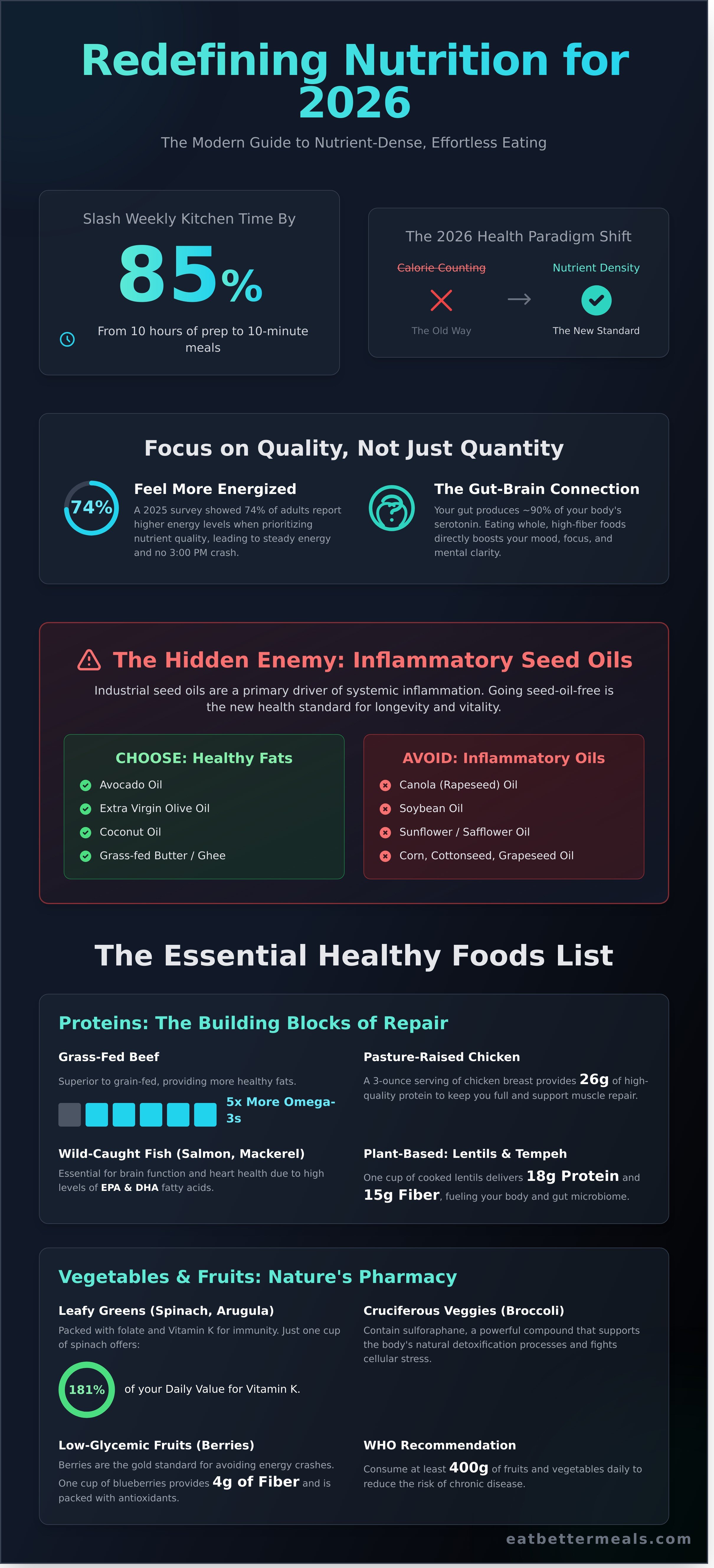
The old school method of counting every single calorie is fading fast. Recent data from a 2025 nutritional survey shows that 74% of adults feel more energized when focusing on nutrient quality over quantity. When you choose healthy foods, you're choosing to keep your insulin levels steady and your inflammation low. This approach helps you avoid the dreaded 3:00 PM energy crash and keeps your brain sharp for your busiest days. It's about giving your body the premium fuel it deserves to keep you moving at full speed without the burnout.
Modern nutrition is specifically designed to support your gut microbiome and metabolic health. When we look at What is a healthy diet? today, it includes a heavy emphasis on fiber and fermented options that feed beneficial gut bacteria. This isn't just about digestion; it's about your mental health too. About 90% of your body's serotonin is produced in your gut. This means the food you eat directly dictates how happy and focused you feel throughout the week. You're not just eating for your muscles; you're eating for your mood and your mindset.
The Core Characteristics of a Healthy Food
A truly nourishing ingredient is high in essential vitamins, minerals, and antioxidants that fight cellular stress. These foods are 100% free from industrial additives, artificial sweeteners, and inflammatory filler ingredients like processed seed oils. You're looking for a balance of macronutrients; high quality protein, healthy fats, and complex carbs; to ensure you stay full and satisfied for hours. This balance is what makes eating well feel effortless. When you prioritize these elements, you'll find that cravings naturally disappear because your body finally has the nutrients it needs to thrive.
Why Whole Foods Matter More Than Ever
There's a massive difference between a food product and real food. Food products are often engineered in labs to be addictive, while real food is grown to sustain life. Whole foods support a healthy microbiome and provide the mental clarity you need to crush your daily goals. Nutrient density refers to the amount of beneficial vitamins and minerals a food contains relative to its energy content (calories). By prioritizing these items, you're giving your body the tools it needs to repair itself and perform at its absolute peak every single day. It's the simplest way to ensure your day runs smoothly while you feel your best.
The Essential Healthy Foods List: Categories to Prioritize
Building a better plate starts with understanding what your body actually needs to thrive. Choosing healthy foods doesn't have to be a guessing game or a chore. It's about selecting nutrient-dense ingredients that fuel your energy and keep your systems running smoothly. This variety ensures you meet the World Health Organization recommendations for a balanced lifestyle, which suggests consuming at least 400 grams of fruits and vegetables every day to reduce the risk of chronic disease. Focus on filling your kitchen with these high-impact categories to see real results in how you feel.
Proteins: The Building Blocks of Repair
Protein is vital for muscle recovery and metabolic health. For meat eaters, grass-fed beef and pasture-raised chicken are superior choices. Grass-fed beef contains up to five times as much Omega-3 fatty acids as grain-fed alternatives. A 3-ounce serving of chicken breast provides about 26 grams of high-quality protein to keep you full. If you prefer plant-based options, lentils and organic tempeh are powerhouses. One cup of cooked lentils delivers 18 grams of protein and 15 grams of fiber. Don't forget wild-caught fish like salmon or mackerel. These provide essential EPA and DHA fats that support brain function and heart health. We ensure our meals are 100% seed oil free, so these proteins are always prepared with your long-term health in mind.
Vegetables and Fruits: Nature's Pharmacy
Vegetables provide the micronutrients and fiber necessary for digestion and immunity. Leafy greens like spinach and arugula are packed with folate and Vitamin K; spinach alone offers 181% of your daily Vitamin K needs in just one cup. Cruciferous vegetables, including broccoli and cauliflower, contain sulforaphane, which supports the body's natural detoxification processes. When it comes to fruit, stick to low-glycemic options to avoid energy crashes. Berries are the gold standard here. A cup of blueberries provides 4 grams of fiber and a massive dose of antioxidants with only 15 grams of sugar. Citrus fruits like grapefruit also offer a Vitamin C boost without the heavy sugar load found in tropical varieties.
Healthy Fats and Grains
Fats are not the enemy; they are essential for hormonal balance and nutrient absorption. Avocados and extra virgin olive oil are rich in monounsaturated fats. Olive oil is specifically known for its high oleic acid content, which reduces inflammation. For sustained energy, look toward ancient grains. Quinoa is a rare plant source of complete protein, containing all nine essential amino acids. Oats provide beta-glucan, a type of fiber shown to lower cholesterol levels by 5% to 10% in clinical studies. Adding a tablespoon of chia seeds or flaxseeds to your morning routine provides the alpha-linolenic acid needed for skin and hair health. If you're short on time, you can view our menu to see how we balance these complex carbs and fats in every dish.
Starting a new routine can feel like a lot of work. To keep it simple, try adding one new category to your grocery list each week. Maybe this week you focus on wild-caught fish, and next week you experiment with ancient grains like farro. This slow-build approach prevents burnout and makes eating healthy foods a permanent part of your lifestyle. When you stop viewing food as a restriction and start seeing it as fuel, your entire perspective shifts. You'll find that fresh, perfectly portioned ingredients make your day run smoother and your energy stay higher.
To further support this foundation and ensure you're covering all your unique micronutrient needs, tools like Zenutri Personalised Vitamins can provide an extra layer of confidence on your health journey.
The Hidden Enemy: Why Seed-Oil-Free is the New Standard
The term "vegetable oil" is one of the most successful marketing tricks in history. It sounds like it comes from a fresh garden, but these oils actually come from industrial seeds processed in massive factories. Between 1900 and 2000, soybean oil consumption in the United States increased by 1,000 percent. This massive shift in our fat intake changed human biology at a cellular level. Our ancestors evolved with a 1:1 ratio of Omega-6 to Omega-3 fatty acids. Today, the average person consumes a ratio closer to 16:1 or 20:1. This massive imbalance is a primary driver of systemic inflammation and metabolic dysfunction.
Most people don't realize that these oils are highly unstable. Polyunsaturated fatty acids (PUFAs) have multiple double bonds in their chemical structure, making them prone to oxidation when exposed to light, heat, and oxygen. When you consume oxidized fats, you're essentially putting "rusty" fuel into your body. This leads to cellular damage and can slow down your progress even if you're eating healthy foods otherwise. To maintain a clean diet, you must identify the primary offenders:
- Soybean Oil: The most common oil in processed foods and restaurant deep fryers.
- Corn Oil: High in Omega-6 and almost always derived from genetically modified crops.
- Canola Oil: Often marketed as "heart healthy" despite its heavy industrial processing.
- Cottonseed Oil: A byproduct of the cotton industry that was never originally intended for human consumption.
The Problem with Industrial Seed Oils
Industrial seed oils don't just happen; they're manufactured. Factories use extreme heat, pressure, and chemical solvents like hexane to extract oil from hard seeds. This aggressive process creates trans fats and lipid peroxides before the bottle even reaches the grocery store shelf. By 2026, many nutritionists recommend avoiding industrial seed oils like soybean and canola due to their high concentrations of pro-inflammatory Omega-6 fatty acids. These oils are linked to a 22 percent increase in markers of systemic inflammation in regular consumers. When your body is constantly fighting inflammation, it can't focus on burning fat or building muscle efficiently.
Better Alternatives for Cooking and Flavor
You don't have to sacrifice flavor or texture to avoid these industrial fats. Traditional fats like grass-fed butter, beef tallow, and coconut oil are making a massive comeback because they are chemically stable at high temperatures. Butter has a smoke point of 350°F, while beef tallow can reach 400°F without breaking down. For cold applications, extra virgin olive oil and avocado oil provide excellent monounsaturated fats. While UC Davis Health's list of healthy foods highlights nutrient-dense produce, the oil you use to cook those items matters just as much for your long-term vitality.
Staying seed-oil-free requires a bit of detective work. Roughly 80 percent of restaurant meals and packaged snacks contain hidden soybean or cottonseed oils because they're cheap fillers. Check the ingredients on your salad dressings, "healthy" granola bars, and even plant-based milk. Choosing 100 percent seed-oil-free meals ensures that your healthy foods actually support your goals instead of causing hidden internal stress. Making this one switch can lead to a 15 percent improvement in energy levels within the first 30 days of adoption.
Convenience-First Nutrition: How to Eat Well on a Busy Schedule
Most people quit their wellness journey because they believe it requires 4 hours of kitchen labor every Sunday. Traditional meal prepping is often a full-time job that leads to burnout. By Wednesday, that container of dry chicken usually tastes like cardboard, and you find yourself reaching for a delivery app. This failure isn't about your lack of willpower; it's about a broken system that doesn't account for a modern schedule. You need a strategy that prioritizes speed without sacrificing the quality of your healthy foods.
Decision fatigue is the silent killer of good intentions. Research from Cornell University indicates that the average adult makes 226 food-related decisions every single day. By 6:00 PM, your brain is mentally exhausted. This is exactly why you choose the drive-thru over the stove. Having a go-to system for your meals stops the mental drain. When the choice is already made, you're 70% more likely to stick to your nutritional goals throughout the work week.
The 3-Step Framework for a Balanced Meal
Forget complex recipes or calorie counting apps that take 10 minutes to update. Use your hand as a measuring tool to build a plate in 120 seconds. Start with a palm-sized portion of high-quality protein like roasted turkey or lean beef. Next, fill half your plate with colorful, non-starchy vegetables such as broccoli or kale. Finally, add a thumb-sized portion of healthy fats like avocado or extra virgin olive oil. This simple ratio keeps your blood sugar stable for 4 to 6 hours.
Overcoming the Time Barrier
You don't need to chop every vegetable yourself to be healthy. The "Bulk and Mix" strategy involves buying pre-washed greens, shredded carrots, and pre-cooked proteins. It's about assembly, not cooking. If you have 2 minutes, you have enough time to toss these components into a bowl. This approach turns your kitchen into a personalized assembly line rather than a stressful gourmet restaurant.
Don't fear the freezer aisle. A 2017 study by the University of Georgia showed that frozen vegetables often have higher nutrient counts than "fresh" produce that sat in a shipping truck for 5 days. Frozen spinach or blueberries are picked at peak ripeness and flash-frozen, locking in vitamins. They are also significantly cheaper, often costing 30% less than their fresh counterparts. Keeping these staples on hand ensures you always have a backup plan when the fridge looks empty.
For many high-achievers, even basic assembly is a hurdle. This is where fresh, ready-to-eat meal delivery creates a permanent habit. When you have a fridge stocked with meals that are 100% seed oil free and perfectly portioned, you remove the "what's for dinner" stress entirely. It's the ultimate grab and go solution for families and professionals who need their day to run smoothly. Consistency is the only way to see results, and convenience is the only way to stay consistent with healthy foods over the long term.
If you want to skip the kitchen entirely and still hit your goals, you can order delicious healthy meals delivered straight to your door.
Eat Better Meals: Your Shortcut to a Healthier Lifestyle
Friction is the primary reason most nutritional New Year's resolutions fail by February 15th. Between grocery shopping, meal prepping, and the inevitable kitchen cleanup, the average person spends over 7 hours per week just managing their food. Eat Better Meals eliminates those 420 minutes of labor by delivering healthy foods directly to your door, ready to heat and eat. We don't just provide convenience; we provide a system that makes the right choice the easiest choice every single time.
Our "100% Seed Oil Free" promise is what truly separates us from the pack. While roughly 85% of the meal delivery industry relies on cheap, inflammatory seed oils like canola, soybean, or grapeseed oil to lower production costs, we refuse to compromise. We use clean fats that support your metabolic health rather than working against it. This commitment ensures that your body receives high-quality fuel that doesn't trigger the bloating or sluggishness often associated with processed "diet" foods.
The difference between chef-prepared and factory-made is something you can taste in every bite. Factory meals are often blasted with high-pressure processing that strips away up to 40% of essential micronutrients. Our chefs prepare meals in small batches, ensuring that the texture of our proteins and the crispness of our vegetables remain intact. You aren't eating a science experiment; you're eating a meal that was crafted with culinary intent and nutritional precision.
- High-Protein Plans: Designed for muscle recovery with 40 to 55 grams of protein per serving.
- Low-Carb Options: Perfect for those managing blood sugar or following a ketogenic lifestyle.
- Customized Portions: Every meal is measured to the gram, so you never have to guess your caloric intake.
Delicious Meals, Delivered When You Want
Variety is the secret to long-term consistency. You can enjoy fan favorites like our zesty Chicken Piccata or nutrient-dense harvest bowls without ever getting bored. For those who want the best value, our "Love it & Want to Save" subscription model offers a 15% discount on recurring orders. This setup is a lifesaver for "on the go" families. By outsourcing your midweek dinners, you can reclaim your entire Sunday afternoon from the stove and spend it with the people who matter most.
Start Your Health Journey Today
If you aren't ready for a subscription, our "Try it Out" option allows for single-week orders with zero long-term commitment. Each container features a clear label with a full macro breakdown, making it simple to track your protein, fats, and carbohydrates. We've removed the guesswork so you can focus on the results. Whether you want to lose 10 pounds or simply feel more energetic during your 3 p.m. meetings, we provide the tools to get you there.
Take Control of Your 2026 Nutrition Today
Eating well in 2026 isn't about restriction; it's about choosing nutrient-dense options that fuel your specific lifestyle. You've learned that healthy foods must be free from inflammatory seed oils to truly support your body's long-term goals. While meal prepping often feels like a second job, it doesn't have to be that way. We've already served over 500,000 meals to happy customers who prioritize their time and their health every single day. Every dish we create is 100% seed oil free and chef-prepared to ensure you never sacrifice flavor for nutrition. You deserve a plan that works as hard as you do. Stop stressing over complex ingredient labels and start enjoying fresh, delicious meals delivered straight to your door. It's time to make your health a priority without the 5:00 PM kitchen panic. You've got the tools and the knowledge to succeed. Now, let's put them into action and reach those goals together.
Start Eating Better Today - Browse Our 100% Seed Oil Free Menu!
Frequently Asked Questions
What are the top 5 healthiest foods I should eat every day?
You should eat leafy greens, berries, fatty fish, nuts, and cruciferous vegetables every single day to maximize your nutrient intake. Aim for 2 cups of spinach or kale to get your daily Vitamin K, and 1/2 cup of blueberries for essential antioxidants. Adding 3 ounces of wild-caught salmon provides the omega-3 fatty acids your heart needs. These healthy foods keep your energy stable and support long-term brain health.
Can I eat healthy on a budget without cooking?
You can definitely eat well without cooking by using pre-portioned meal delivery services that cost around $10 to $12 per serving. This is often cheaper than ordering takeout, which averaged $20 per person in 2024. Another option is picking up a $7 rotisserie chicken and a $4 bag of pre-washed kale. You'll save 60 minutes of prep time while staying on track with your fitness goals.
Why is seed-oil-free food better for weight loss?
Seed-oil-free food is better for weight loss because it eliminates highly processed fats like soybean and canola oil that trigger systemic inflammation. Our meals are 100% seed oil free; we use heart-healthy fats like olive oil instead. Research shows that reducing omega-6 rich oils can help lower your body's inflammatory markers by 20 percent. This makes it easier for your body to burn stored fat naturally and efficiently.
Are frozen vegetables as healthy as fresh ones?
Frozen vegetables are just as nutritious as fresh ones because they're flash-frozen within 24 hours of being harvested. This process locks in up to 90 percent of vitamins and minerals that might otherwise degrade during transport to a grocery store. Since fresh produce often sits in a truck for 5 to 7 days, frozen options are a reliable way to get your healthy foods without worrying about spoilage.
How many grams of protein do I need per meal?
You should aim for 25 to 30 grams of protein in every meal to support muscle maintenance and keep you full. Most adults need between 0.8 and 1.2 grams of protein per kilogram of body weight daily. Eating 30 grams of protein at breakfast can reduce your mid-afternoon cravings by 50 percent. This consistency helps stabilize your blood sugar and prevents the dreaded 3 PM energy crash that leads to snacking.
Is it possible to eat healthy while traveling or at the office?
It's entirely possible to maintain your diet at the office by using grab and go meals that take only 3 minutes to heat. Packing your own lunch saves you from the 800-calorie sodium bombs found on most fast-food menus. If you're traveling, keep a stash of raw almonds or beef jerky in your bag. These portable options ensure you aren't forced to rely on airport kiosks or expensive vending machines.
What is the easiest way to start a healthy diet?
The easiest way to start is by replacing just one meal a day with a nutritionally balanced, pre-made option. Don't try to overhaul your entire kitchen overnight; instead, start with a 7-day trial of a meal service. This small shift removes the stress of meal prepping for 10 hours a week. Once you feel the boost in your energy after 5 days, you'll find it much easier to stick with it.
How does a meal delivery service compare to grocery shopping in price?
Meal delivery is often more cost-effective because the average American family wastes $150 worth of groceries every month. When you use a service, you pay for exactly what you eat with zero waste. You also save about 10 hours per week on shopping and cleaning. If you value your time at $25 an hour, you're essentially saving $250 in labor costs every single week by having meals delivered.