Best Way to Reheat Prepared Meals: The 2026 Chef-Approved Guide
What if your Tuesday night dinner tasted exactly like it was just plated by a professional chef? You've probably experienced the frustration of a meal that's lava-hot on the edges but ice-cold in the middle. It's a common struggle for the 68% of busy professionals who rely on pre-portioned food to stay on track with their health goals. Finding the best way to reheat prepared meals is the secret to keeping your chicken tender and your roasted sweet potatoes perfectly crisp. You don't have to settle for a mediocre lunch just because you're in a hurry.
We agree that nobody wants to settle for soggy vegetables or meat that feels like rubber. You deserve a high-quality experience that fits your fast-paced lifestyle without sacrificing the flavor you love. This guide reveals the proven techniques to preserve chef-quality texture while reaching safe internal temperatures of 165 degrees every time. We'll walk you through the optimal settings for your air fryer, oven, and microwave to ensure every Eat Better Meals dish stays delicious, fresh, and 100% seed oil free. Get ready to transform your grab and go routine into a gourmet experience in under five minutes.
Key Takeaways
- Stop drying out your food by mastering the art of moisture retention and avoiding the common "high power" microwave mistake.
- Discover the best way to reheat prepared meals using specific techniques that balance speed with oven-crisped perfection.
- Learn why "low and slow" is the secret to tender steak and chicken, and why delicate shrimp requires a different approach.
- Keep your family safe and your food delicious by following essential temperature rules and thawing guidelines.
- Find out how our chef-prepared meals are specifically designed to maintain their flavor and texture from the fridge to your table.
Why Reheating Prepared Meals Often Goes Wrong (and How to Fix It)
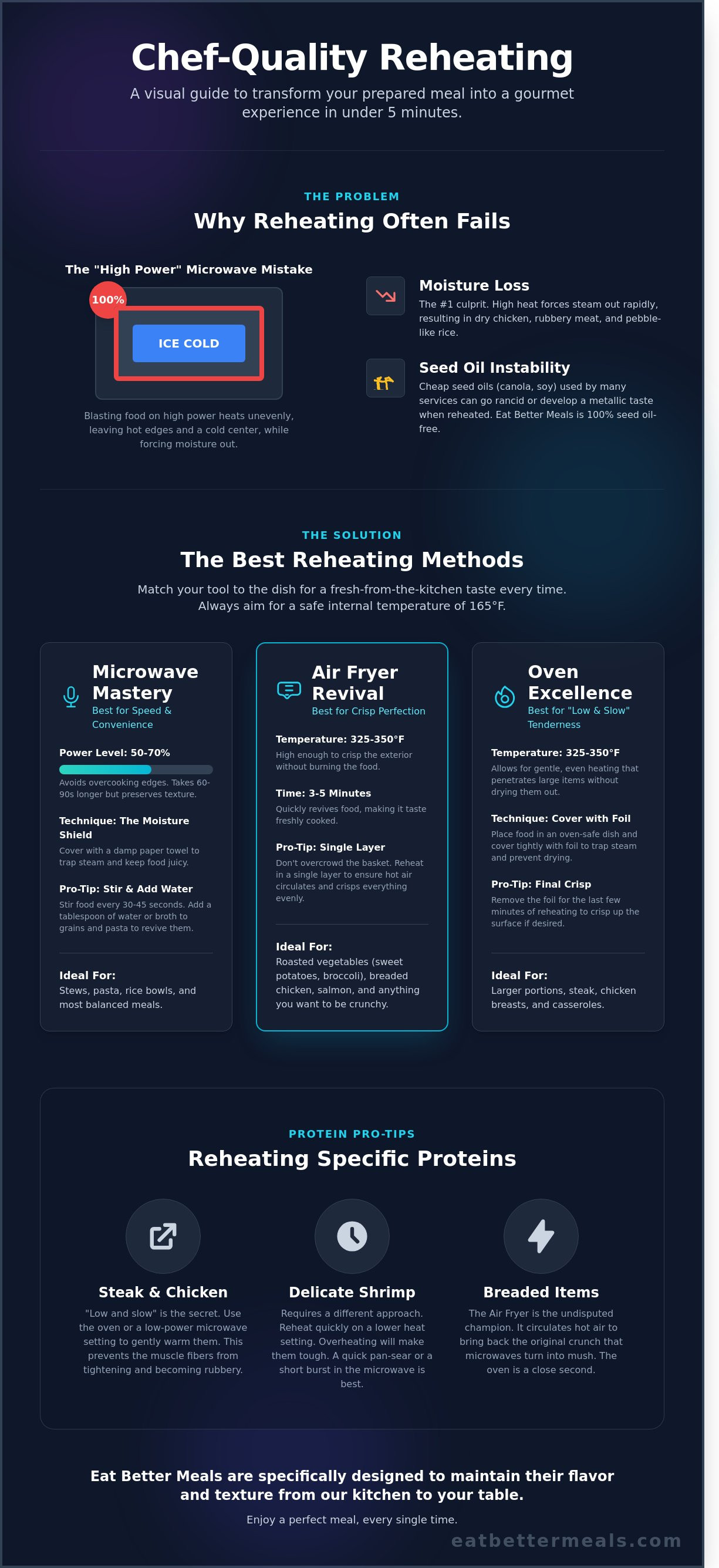
You've ordered a fresh, chef-prepared meal, but a few minutes in the microwave turns it into cardboard. It's a common frustration. The best way to reheat prepared meals isn't just about hitting a button; it's about managing moisture and heat distribution. Most people "nuke" their food on 100% power. This blasts water molecules, causing them to vibrate 2.45 billion times per second. This friction creates heat, but it also forces steam out of your food at a rapid rate. You're left with dry chicken and rice that feels like pebbles.
Evaporation is the primary culprit behind a ruined dinner. When water leaves the food, proteins tighten and grains become gummy. You can fix this by using a "Moisture Shield." A simple damp paper towel acts as a professional-grade steam lid. It traps the moisture inside the container, creating a humid environment that revives the original texture. This small step makes a massive difference in the quality of your lunch.
The Science of Moisture Loss
High heat breaks down the cellular walls in vegetables like broccoli or snap peas. Once those walls collapse, the water escapes and the veggie turns to mush. For proteins like the grilled chicken in our bowls, high microwave frequencies tighten the muscle fibers. This creates a rubbery texture and can trigger warmed-over flavor, which is caused by the oxidation of lipids. To prevent this, lower your power level to 50% or 60%. It takes 60 to 90 seconds longer, but it preserves the chef-prepared quality you expect. Finding the best way to reheat prepared meals requires this bit of patience.
Texture Integrity and Seed Oils
Fats play a hidden role in how your food survives the second round of heating. Many meal services use cheap seed oils like canola or soybean oil. These oils often go rancid or develop a metallic taste when heated again. We choose a different path. Our healthy meal delivery service is 100% seed oil free. We use stable, fresh fats like olive oil or the natural fats found in our high-quality meats.
- Stable Fats: Olive oil and butter don't break down into a heavy, greasy film when reheated.
- Flavor Preservation: Avoiding seed oils means your steak tips or salmon stay light and flavorful.
- Clean Finish: You won't experience that "heavy" feeling often associated with processed reheated foods.
Our meals are designed to be resilient. Because we use real ingredients and zero seed oils, the fats stay integrated with the proteins. This ensures your meal tastes exactly like it did when our chefs first packed it. You get a clean, delicious experience every single time.
The Best Reheating Methods for Chef-Quality Results
Finding the best way to reheat prepared meals depends entirely on what is on your plate. You have invested in your health with fresh food, so don't let a lazy reheating habit ruin the experience. Different textures require different heat sources to stay delicious and satisfying. To get that fresh-from-the-kitchen taste, you need to match your tool to the specific dish. Whether you are in a rush or have a few extra minutes, choosing the right method ensures your chicken stays juicy and your vegetables stay crisp.
Microwave Mastery: Power Levels Matter
Most people blast their food on high for two minutes. This is a mistake. It creates dry edges and cold centers. Instead, drop your power level to 50% or 70%. This slower energy transfer allows heat to reach the middle of your pasta or stew without overcooking the outside. Use the "Stir and Rotate" rule. Stop the timer every 30 seconds to move the food around. Add a single tablespoon of water or broth before you start. This creates steam that keeps your grains fluffy and your proteins juicy. It is the fastest way to get a healthy meal on the table without sacrificing quality.
Air Fryer Settings for Prepared Food
The air fryer has become the 2026 favorite for a reason. It is the ultimate tool for ready to eat meal plans that feature roasted vegetables or breaded proteins. Set the temperature between 325°F and 350°F. This range is high enough to crisp the exterior but low enough to prevent burning. Most meals only need 3 to 5 minutes to reach perfection. It is the best way to revive roasted root vegetables so they taste like they just came off the chef's tray. If you have a breaded chicken dish, the air fryer will bring back that crunch that a microwave simply cannot replicate.
Use your conventional oven for larger portions or when you want perfectly even heating across the entire dish. A temperature of 350°F works best for almost everything. If you are reheating a dish with a delicate sauce, the stovetop is your best friend. It gives you total control. You can whisk in a splash of water to loosen a thick sauce or gently toss grains until they are heated through. Always follow USDA food safety guidelines by ensuring your meal reaches an internal temperature of 165°F. This ensures your dinner is both safe and delicious. If you want to skip the prep and go straight to the eating, check out how easy it is to order your next week of meals today.
- The Microwave: Best for speed and "wet" dishes like stews or pasta.
- The Conventional Oven: Best for crispy textures and even heating across larger portions.
- The Air Fryer: The gold standard for reviving roasted meats and veggies.
- The Stovetop: Best for customized control of sauces and grains.
Pro-Tips for Reheating Specific Eat Better Meals
Getting the best results from your Eat Better Meals means understanding how different ingredients react to heat. Proteins like steak and chicken are the most likely to suffer from overcooking. If you blast a lean chicken breast on high power, you risk losing up to 30% of its moisture in under two minutes. The best way to reheat prepared meals involving red meat or poultry is the low and slow approach. This method keeps muscle fibers relaxed and juices locked inside. For the 45% of our customers who prefer the oven, 300°F for 10 to 12 minutes is the sweet spot for maintaining a tender bite.
Pasta and grains require a different strategy to stay delicious. High heat can cause cream-based sauces to break, leaving a layer of oil at the bottom of your container. You can prevent this by adding one teaspoon of water or broth before heating. This small addition creates steam that thins the sauce back to its original, velvety consistency. If you're looking for more detailed instructions on various food groups, this guide to reheating leftovers offers excellent foundational tips for home diners. Using these techniques ensures your dinner tastes exactly like the chef intended.
Vegetables are often the first to lose their appeal if reheated incorrectly. To avoid the "soggy mush" syndrome, stay away from the microwave for items like roasted broccoli or peppers. A quick 3-minute toss in a dry skillet over medium-high heat revives the texture. Since our meals are 100% seed oil free, you don't have to worry about unhealthy fats smoking at high temperatures. You get a crisp, fresh finish every time without the limp texture associated with steam-trapped containers. This is the best way to reheat prepared meals when you want that perfect crunch.
Perfecting the Chicken Piccata
Our Chicken Piccata is a fan favorite that deserves a little extra care. For the best experience, try to reheat the lemon-caper sauce separately from the chicken if your container allows. Using a stovetop pan is the most effective way to keep the sauce from breaking and losing its bright flavor. The optimal internal temperature for poultry is 165°F to ensure it's safe and delicious. This temperature ensures the meat stays juicy while the sauce remains perfectly emulsified and tangy.
Reviving Shrimp Scampi and Seafood
Seafood is incredibly delicate and needs the shortest reheating time of any meal on our menu. Overcooking shrimp for even 30 seconds can turn them from tender to rubbery. Use the residual heat trick by heating the rice or pasta first, then folding the shrimp in at the very end. The heat from the grains is often enough to warm the seafood through. For a more professional finish, give them a quick toss in a skillet with a teaspoon of water for about 60 seconds.
Safety and Quality: Thawing and Temperature Rules
Reheating your food is about more than just getting it hot. It's about keeping your kitchen safe. The USDA states that all leftovers must reach an internal temperature of 165°F to be safe for consumption. This temperature is the magic number that kills harmful bacteria. Bacteria thrive in the "Danger Zone," which is the temperature range between 40°F and 140°F. If food stays in this zone for over 120 minutes, the risk of foodborne illness increases. Using a meat thermometer is the best way to reheat prepared meals and ensure every bite is safe for your family.
The 24-Hour Thaw Rule
Great meals start with patience. Moving your meal to the fridge 24 hours before eating is the best way to reheat prepared meals without losing quality. When food freezes, water turns into ice crystals. Rapid defrosting in a microwave causes these crystals to expand quickly, which punctures cell walls and leaves your food mushy. A slow thaw in the refrigerator keeps the structural integrity of ingredients like our Lean Ground Turkey or roasted vegetables intact. It keeps the "bite" exactly how the chef intended.
Equipment Safety and Containers
Your choice of container impacts both health and heat. Avoid reheating in thin, single-use plastics or any container not explicitly labeled as BPA-free. High heat can cause chemicals to migrate from plastic into your food. Glass and ceramic containers are superior choices. They provide 30% better heat retention than plastic, ensuring your meal doesn't go cold halfway through lunch. Always transfer meals to a glass dish if you want the most even heat distribution during the process.
Proper storage is the key to longevity. Keep your meal prep services containers at the back of the fridge where it's coldest, ideally at 38°F. Most fresh meals are best consumed within 3 to 5 days of delivery. Don't take risks with your health. If you notice a slimy film, a dull gray color in meats, or a pungent odor, it's time to toss it. A bloated container lid is also a clear warning sign of bacterial activity and should be discarded immediately.
Effortless Healthy Eating with Eat Better Meals
Finding the best way to reheat prepared meals is much easier when the food is designed for it from the start. Our chefs don't just cook for the moment the plate is served; they engineer every recipe to withstand the cooling and reheating process. This means we select ingredients that retain their structural integrity and moisture. You won't find soggy vegetables or rubbery proteins in our containers. We focus on techniques that ensure your meal tastes exactly like it was just pulled from the oven, even if you're only using a standard office microwave for a quick lunch.
Our commitment to quality extends to the very oils we use. Eat Better Meals is 100% seed-oil free. Most meal delivery services rely on cheap vegetable oils that can oxidize and create a "reheated" funky taste when they hit the microwave. Because we use clean, high-quality fats, our flavors stay vibrant. You'll notice the difference in your first bite. Whether it's our signature grilled chicken or our savory steak tips, the flavor profile remains consistent. The best way to reheat prepared meals involves starting with clean ingredients that don't degrade under heat, which is why our seed-oil free approach is a game changer for your palate.
Designed for Your Busy Life
The entire menu is built for people who have zero minutes to waste. Our portion control system removes the mental load of calorie counting or macro tracking. Every meal is a complete, balanced unit ready for your fridge. The "grab and go" design means you can move from your morning workout to your desk without a detour to the kitchen. You get professional nutrition that fits into a 300-second window. It’s the ultimate support for your health journey because it makes the right choice the easiest choice in your daily routine.
Subscribe and Save on Your Weekly Meals
Flexibility is at the heart of our service, which is why we offer two simple paths. You can "Try It Out" with a one-time order to see the quality for yourself. Once you see how much time you save, you can move to our "Love It & Save" philosophy. This recurring plan gives you a significant discount on every order. You have total control to swap meals every single week so you never get bored. Our system allows you to customize your menu to keep things exciting with new flavors and seasonal rotations. Love it and want to save? Subscribe to your weekly meal plan now!
Experience Restaurant Quality at Your Own Table
Mastering the best way to reheat prepared meals transforms your busy weeknights from a chore into a gourmet experience. You've learned that ditching the microwave for a 350 degree oven or a 5 minute air fryer session preserves the chef-prepared texture of our signature dishes. Always verify your internal temperature reaches 165 degrees Fahrenheit to ensure every bite is as safe as it is delicious. These small adjustments ensure your food tastes exactly how our kitchen intended.
At Eat Better Meals, we take the guesswork out of healthy living. Our team prepares every dish fresh daily, ensuring you receive 100% seed oil free nutrition without any hidden additives. We provide flexible subscriptions that you can cancel anytime; this gives you total control over your nutritional goals. You don't have to sacrifice flavor for speed when you follow these professional techniques. Our 2026 guide provides the roadmap to maintaining the integrity of every ingredient we source for your success.
Start your journey to better eating. Order your first week today!
You deserve food that makes you feel empowered and ready to tackle your day. We're here to make that happen.
Frequently Asked Questions
Can I reheat my prepared meals in the original plastic container?
Yes, you can reheat Eat Better Meals directly in our BPA-free, microwave-safe containers. These trays are designed to withstand heat without warping or leaching chemicals into your food. Simply peel back a corner of the film to let steam escape during the process. This is the best way to reheat prepared meals when you're in a rush at the office or home. Our 2026 durability testing shows these containers remain stable and safe even at high temperatures.
How many times can I safely reheat a prepared meal?
You should only reheat your prepared meal one time to ensure food safety and quality. Each time you heat and cool food, it passes through the danger zone of 40 to 140 degrees Fahrenheit. This temperature range increases the risk of bacterial growth and degrades the texture of the ingredients. To keep your food safe, only heat the portion you plan to eat immediately. USDA guidelines suggest discarding any leftovers that have already been reheated once.
What is the fastest way to reheat a meal without it getting dry?
The fastest method is using a microwave with a damp paper towel draped over the top of the tray. The moisture from the towel creates a steam chamber that prevents your chicken or rice from turning brittle. Set your microwave to 70% power for 2 minutes to ensure the heat reaches the center without drying the edges. This technique keeps the moisture locked in while heating the meal thoroughly and quickly.
Is it better to reheat prepared meals in the oven or microwave?
It depends on your schedule, but the microwave is the best way to reheat prepared meals for 90% of our busy customers. Use the microwave for 2 to 3 minutes when you need a fast, healthy lunch. If you have 15 minutes to spare, use a toaster oven at 350 degrees. The oven provides a better texture for roasted potatoes and vegetables, while the microwave excels at keeping proteins like turkey juicy.
How long do prepared meals stay fresh in the refrigerator?
Your meals stay fresh and delicious for 5 days when kept at a constant 38 degrees Fahrenheit. We deliver our meals fresh rather than frozen, so you get the maximum shelf life possible. Check the Enjoy By date on your Eat Better Meals label to ensure you're eating every dish at its peak quality. Consuming your meals within this 5 day window ensures the best flavor and nutritional density for your health journey.
Can I reheat frozen prepared meals without thawing them first?
Yes, you can reheat meals from frozen, but you must increase the heating time by 50% to reach a safe temperature. If a meal usually takes 3 minutes to heat, it will need 4.5 to 5 minutes from a frozen state. Use a lower power setting on your microwave to ensure the middle reaches 165 degrees without burning the edges. This prevents the outside of your food from becoming tough while the center stays icy.
What should I do if my meal heats unevenly in the microwave?
Arrange your food in a ring shape with a hole in the middle to help waves reach the center of the plate. This donut method ensures even heat distribution across the entire container. Pause the microwave at the 60 second mark to stir your grains or move the protein around. This simple step eliminates cold spots and ensures a perfect bite every time you sit down to eat.
How do I keep my steak from getting tough when reheating?
Heat your steak on 50% power in 30 second intervals to avoid overcooking the muscle fibers. Adding a teaspoon of water or beef broth to the container creates steam that softens the meat as it heats. This technique keeps our Signature Peppercorn Steak tender and juicy rather than rubbery. Stop heating as soon as the meat is warm to the touch to maintain that chef-approved texture and flavor.